
Annual report 2024–25 · Published in full · ABN 00 000 000 000 Download the PDF →
Annual report · Financial year 2024–25

The year we learned
to be slower,
and to report honestly.

This is our third annual report and the first one we are publishing in full — including the parts we got wrong, the partnerships that did not work, and the parts of the organisation we are still building. We hope you find it useful.

A foundation’s annual report is the most honest thing it publishes. We would rather you saw us clearly than liked us.
1,247 People directly
supported this year
$2.18m Total income
across all sources
94% Of every dollar
went to programs — audited by XYZ & Co.
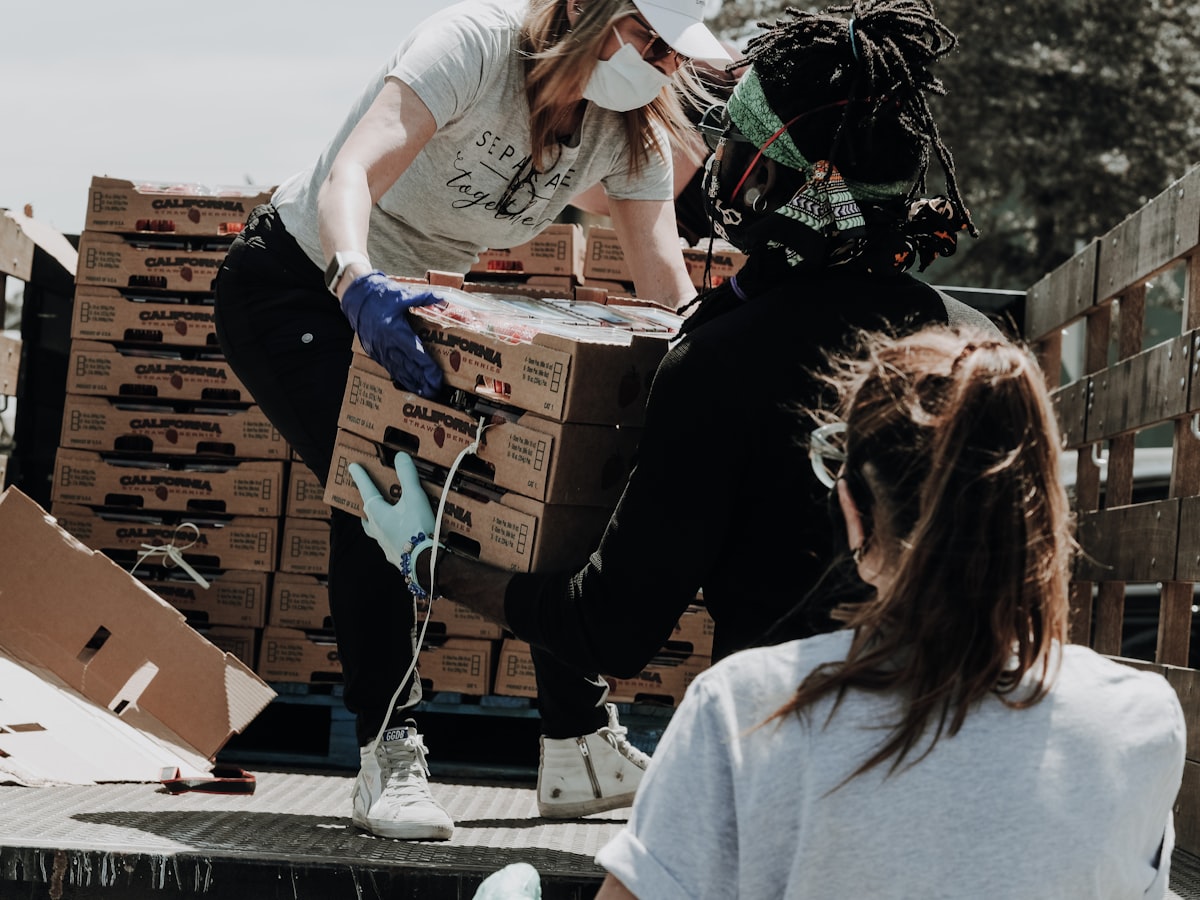
Volunteers packing supplies
Fairfield, March 2025. Packing kits for the winter material-support round.
In full · Audited · Honest about what worked · Honest about what didn’t
01

The hardest part of writing this letter was deciding what to leave in.

Every year we debate, internally, how much of the organisation’s missteps to publish. The instinct of every not-for-profit leader I know is to lead with the wins, and to bury the parts where we did not deliver.

We have decided, this year, not to do that. This report includes a section called What we got wrong. It is the section we are most proud of, and the one we suspect most readers will skip.

The work of the foundation is small, but it is honest. We are still learning how to do it well. We are still building the structures — governance, fundraising, evaluation — that will allow us to keep doing it for a long time.

To the partners, donors, volunteers, and community members who have walked with us this year: thank you. To those who have criticised us: also thank you. Both kinds of attention are how we improve.

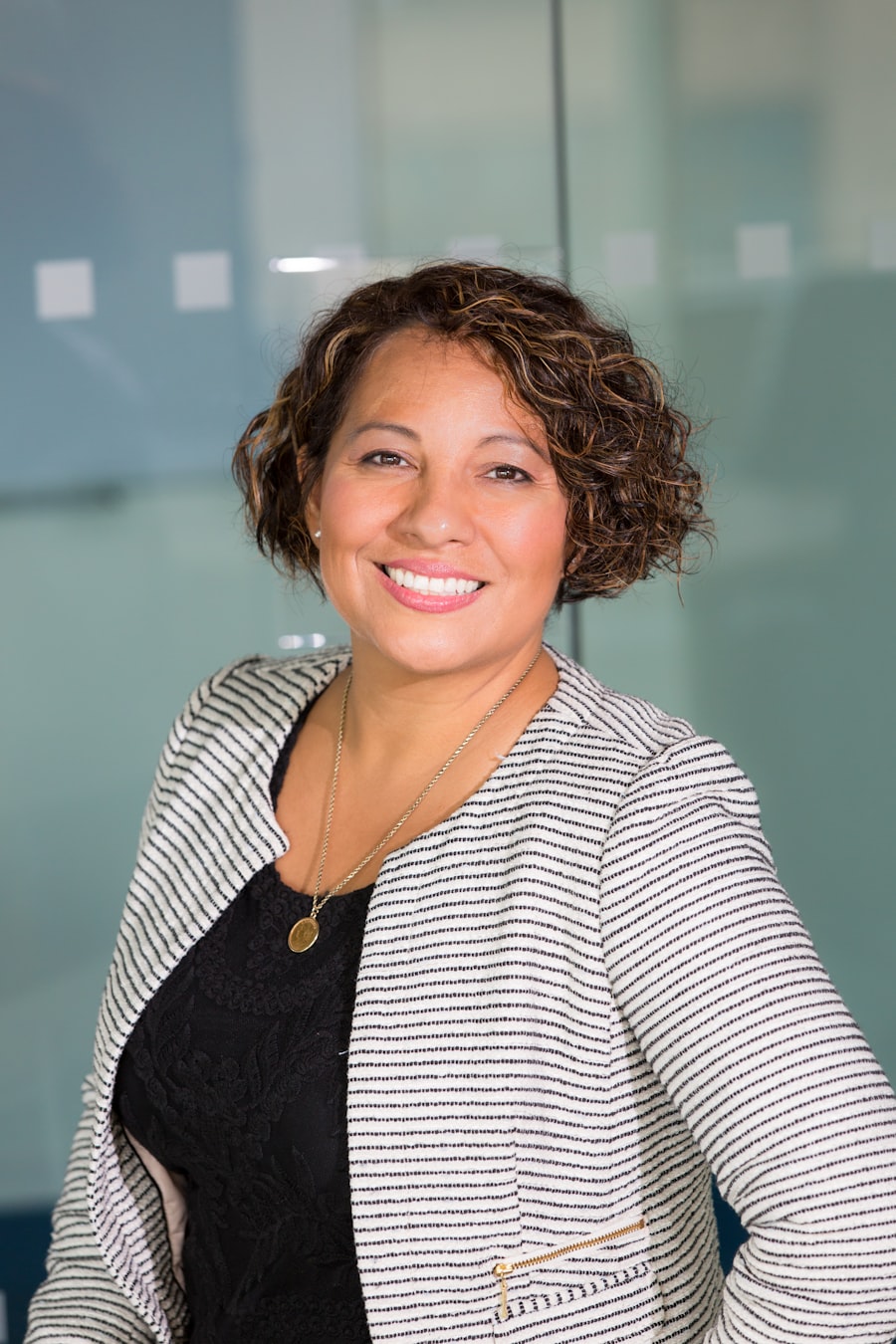
Imogen Hartley
Founding Director, Cafkralu Foundation

02

The numbers we hold ourselves to. Every figure below is independently audited.

i.

1,247

People directly supported across our three program areas, measured by individual service records held by partner organisations.

ii.

37

Partner organisations we worked with across greater metropolitan Sydney, up from 22 the prior year.

iii.

$1.6m

Of material support delivered to families and individuals through partner organisations — grocery vouchers, school supplies, household goods, and emergency heating assistance.

iv.

218

Families receiving extended casework continuity support across three community centres in greater Sydney.

v.

19

Women who completed our two cohorts of the Pathways program in 2024–25 — vocational training, credentialing, and small-business mentoring.

vi.

62

Active mentoring matches between trained adult mentors and children in out-of-home care or experiencing sustained hardship.

03

Three programs. Honest reporting on what worked, what shifted, and what we are still learning.

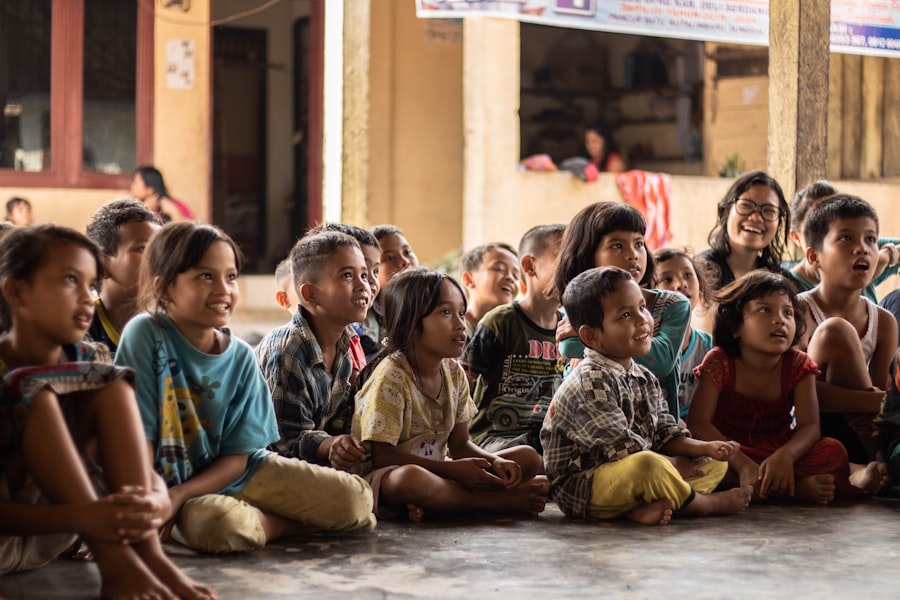
Children in our after-school learning program
i. — Children

After-school learning & mentoring.

We expanded after-school learning from two primary schools to three, adding a new partnership in Canley Heights. We sustained 62 mentoring matches across two specialist out-of-home care providers.

What worked: the addition of trained bilingual volunteers at the Canley Heights site increased attendance by 38% in the second term.

What we are still learning: whether the children who attend most consistently are the ones who most need the program — or whether we are simply better at retaining families who are already engaged with school.
Women in the Pathways program
ii. — Women

Financial counselling & Pathways.

The financial counselling drop-in at the Parramatta community health centre continued in its second year, with 327 individual sessions. Two cohorts of the Pathways program — 19 women in total — completed the nine-month structured program.

What worked: the cohort model. Women who moved through the program with a stable peer group reported higher confidence and higher completion rates than the previous one-to-one model.

What we are still learning: whether 19 women a year is the right scale, or whether we should run more cohorts of fewer women each. We do not yet know.

Families receiving casework support
iii. — Families

Casework continuity & material support.

We continued to fund extended casework hours at three community centres — Inner West, Western Sydney, Northern Beaches — reaching 218 families over the year. $1.6 million of direct material support flowed through our full partner network.

What worked: the deliberate decision to fund the centres whose waiting lists are the longest, not the ones whose fundraising appeals are the loudest.

What we are still learning: how to measure the difference we are making when the work is “being there” rather than “delivering a service”. The standard evaluation metrics do not capture it well.

04

Total income: $2.18 million. Total expenditure: $2.04 million. The full audited statements are linked at the bottom of this page.

i.

Income by source

Individual donations: $842,000 (39%).
Recurring donors: $516,000 (24%).
Corporate partnerships: $410,000 (19%).
Grants & trusts: $314,000 (14%).
Investment income: $98,000 (4%).

ii.

Expenditure by area

Direct program delivery: $1.62m (79%).
Partner organisation grants: $310,000 (15%).
Governance & reporting: $74,000 (4%).
Fundraising costs: $36,000 (2%).

iii.

Reserves at year-end

Operating reserve: $680,000.
Equivalent to roughly 4 months of operating expenditure. Below our long-term target of 6 months — we plan to rebuild this over the coming financial year.

iv.

Excluded funding

Consistent with our published funding policy, we received $0 from gambling, tobacco, alcohol, and fossil fuel interests in 2024–25. We continue to publish our full funding policy on request.

v.

Audit

Our financial statements were audited by XYZ & Co., independent registered company auditors. The full audit report and management letter are published alongside this report.

vi.

DGR status

We continue to work toward Deductible Gift Recipient (DGR) status with the Australian Taxation Office. We expect to lodge our formal application in the first half of 2025–26.

05

The section we are most proud of, and the one we suspect most readers will skip. We are publishing it anyway.

Our volunteer program was underprepared

In our second year we onboarded 14 new volunteers across three programs without the structured induction we said we would build. Three of those volunteers reported feeling unclear about their role within the first month, and one chose to leave. We have since rebuilt the induction and published a volunteer handbook.

Our evaluation framework did not match the work

We measure outcomes with a framework designed for direct service delivery. Much of what we do — casework continuity, presence, multi-year partnerships — does not fit neatly into that framework. We continue to underreport on the work we are most proud of, because we have not yet built the tools to report on it well.

One partnership ended badly

One of our partner organisations — whose name we are not publishing here to protect the relationship — ended their work with us in March 2025. We do not believe the partnership was serving the community as well as it should have. We did not handle the transition as well as we should have, and we are sorry.

06

The year ahead is about consolidation, not expansion.

We are not adding new program areas in 2025–26. We are deepening the three we already run, building the organisational capacity to sustain them, and finishing the work toward DGR status.

07

The full report, including audited financial statements and the complete list of partners and donors, is available below.

Download the full PDF (2.4 MB) Download audited statements only (820 KB)

We publish the full donor list (with consent) and the complete list of partner organisations in the PDF. If you would like to discuss anything in this report, we would welcome the conversation.